Web cookies (also called HTTP cookies, browser cookies, or simply cookies) are small pieces of data that websites store on your device (computer, phone, etc.) through your web browser. They are used to remember information about you and your interactions with the site.
Purpose of Cookies:
Session Management:
Keeping you logged in
Remembering items in a shopping cart
Saving language or theme preferences
Personalization:
Tailoring content or ads based on your previous activity
Tracking & Analytics:
Monitoring browsing behavior for analytics or marketing purposes
Types of Cookies:
Session Cookies:
Temporary; deleted when you close your browser
Used for things like keeping you logged in during a single session
Persistent Cookies:
Stored on your device until they expire or are manually deleted
Used for remembering login credentials, settings, etc.
First-Party Cookies:
Set by the website you're visiting directly
Third-Party Cookies:
Set by other domains (usually advertisers) embedded in the website
Commonly used for tracking across multiple sites
Authentication cookies are a special type of web cookie used to identify and verify a user after they log in to a website or web application.
What They Do:
Once you log in to a site, the server creates an authentication cookie and sends it to your browser. This cookie:
Proves to the website that you're logged in
Prevents you from having to log in again on every page you visit
Can persist across sessions if you select "Remember me"
What's Inside an Authentication Cookie?
Typically, it contains:
A unique session ID (not your actual password)
Optional metadata (e.g., expiration time, security flags)
Analytics cookies are cookies used to collect data about how visitors interact with a website. Their primary purpose is to help website owners understand and improve user experience by analyzing things like:
How users navigate the site
Which pages are most/least visited
How long users stay on each page
What device, browser, or location the user is from
What They Track:
Some examples of data analytics cookies may collect:
Page views and time spent on pages
Click paths (how users move from page to page)
Bounce rate (users who leave without interacting)
User demographics (location, language, device)
Referring websites (how users arrived at the site)
Here’s how you can disable cookies in common browsers:
1. Google Chrome
Open Chrome and click the three vertical dots in the top-right corner.
Go to Settings > Privacy and security > Cookies and other site data.
Choose your preferred option:
Block all cookies (not recommended, can break most websites).
Block third-party cookies (can block ads and tracking cookies).
2. Mozilla Firefox
Open Firefox and click the three horizontal lines in the top-right corner.
Go to Settings > Privacy & Security.
Under the Enhanced Tracking Protection section, choose Strict to block most cookies or Custom to manually choose which cookies to block.
3. Safari
Open Safari and click Safari in the top-left corner of the screen.
Go to Preferences > Privacy.
Check Block all cookies to stop all cookies, or select options to block third-party cookies.
4. Microsoft Edge
Open Edge and click the three horizontal dots in the top-right corner.
Go to Settings > Privacy, search, and services > Cookies and site permissions.
Select your cookie settings from there, including blocking all cookies or blocking third-party cookies.
5. On Mobile (iOS/Android)
For Safari on iOS: Go to Settings > Safari > Privacy & Security > Block All Cookies.
For Chrome on Android: Open the app, tap the three dots, go to Settings > Privacy and security > Cookies.
Be Aware:
Disabling cookies can make your online experience more difficult. Some websites may not load properly, or you may be logged out frequently. Also, certain features may not work as expected.
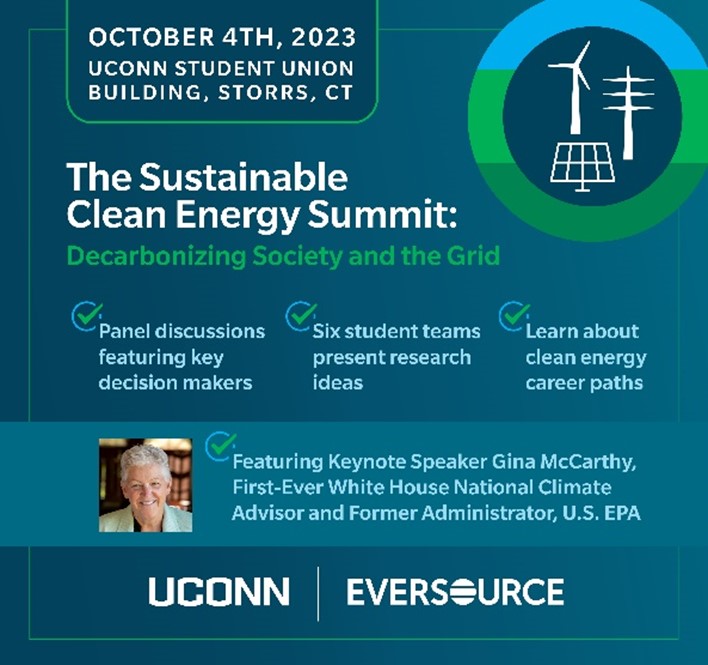
Co-hosted by the University of Connecticut and Eversource, the summit will take place at UConn, Storrs and will bring together academic, utility, industry, municipal and legislative experts to discuss the shifting energy landscape and will feature final presentations from six student-led research teams as part of the Eversource-sponsored Clean Energy and Sustainability Innovation Program (CESIP). As part of this program, students are researching possible solutions (technical, social, and political) to address different aspects of the grand challenge of decarbonization at the local (UConn campuses), state and regional (New England) levels.
The student teams will be presenting their work at the summit. Based on their presentations and the future potential of their work, a winning team will be selected for funding. It is our hope that highlighting the important work of these students on real challenges will open the door for engaging conversations throughout the summit. We anticipate many students will attend.
The summit will open with the keynote speaker Gina McCarthy, White House National Climate Advisor and Former Administrator, U.S. Environmental Protection Agency, and include two panels with leaders from industry, government (state and national), and community organizations: one on the decarbonization of the grid and the second on the technologies of geothermal and hydrogen. The closing Clean Energy Engagement Fair will begin with a brief student panel representing groups from across the University, sharing their motivation and approach to involvement. Afterwards, there will be booths and resources providing information about how to get involved in the clean energy space at UConn and in the industry. We are proud of the work that every UConn student undertakes during their education to increase their citizenship and their interest in the social, economic, cultural, and natural environments of the state and beyond.
We hope you can participate. Learn more and register here!
Connecticut and University of Connecticut (UConn) are national leaders in Clean Energy and Sustainability. UConn was recently selected by the U.S. Department of Energy to lead a nationwide decarbonization effort, centrally coordinating critical activities that can facilitate the adoption of Onsite Sustainable Energy Technologies among large energy users. This honor builds upon UConn’s reputation as a national leader in advancing clean energy.
UConn’s Innovation Partnership Building (IPB) at UConn Tech Park is a focal point for businesses interested in reducing their carbon footprint. By connecting companies to critical energy research, incredible high-tech facilities, and programs like Senior Design projects and professional education, the IPB is committed to driving progress in sustainability, and securing a sustainable, efficient, and profitable future powered by clean energy.
Recently, the IPB began conversations with ASSA ABLOY on applying state-of-the-art research towards achieving ASSA ABLOY’s sustainability commitments. Discussions led to options for student engagement, particularly through UConn’s Senior Design program.
Each year, UConn’s School of Engineering capstone Senior Design program engages seniors, faculty, and industry in a yearlong partnership to develop and apply innovative solutions to engineering challenges faced in real-life business settings.
In 2023, over 240 Senior Design projects were sponsored by more than 120 global and domestic participating organizations representing manufacturing, pharmaceuticals, medical, consulting, and utilities sectors. Students and their supporting faculty advisor work together with an industry sponsor to develop solutions to real-life problems in the field. The students research and analyze the problem, conceptualize design solutions and present solutions that can make a real difference to local industry and the state of Connecticut.
Recognizing the potential of enlisting student help to achieve their sustainability goals, ASSA ABLOY sponsored two UConn Senior Design projects.
ASSA ABLOY is the global leader in access solutions, operating in over 70 countries around the world with industry leading innovation and technology, making them a perfect fit as a sponsor for the Senior Design projects.
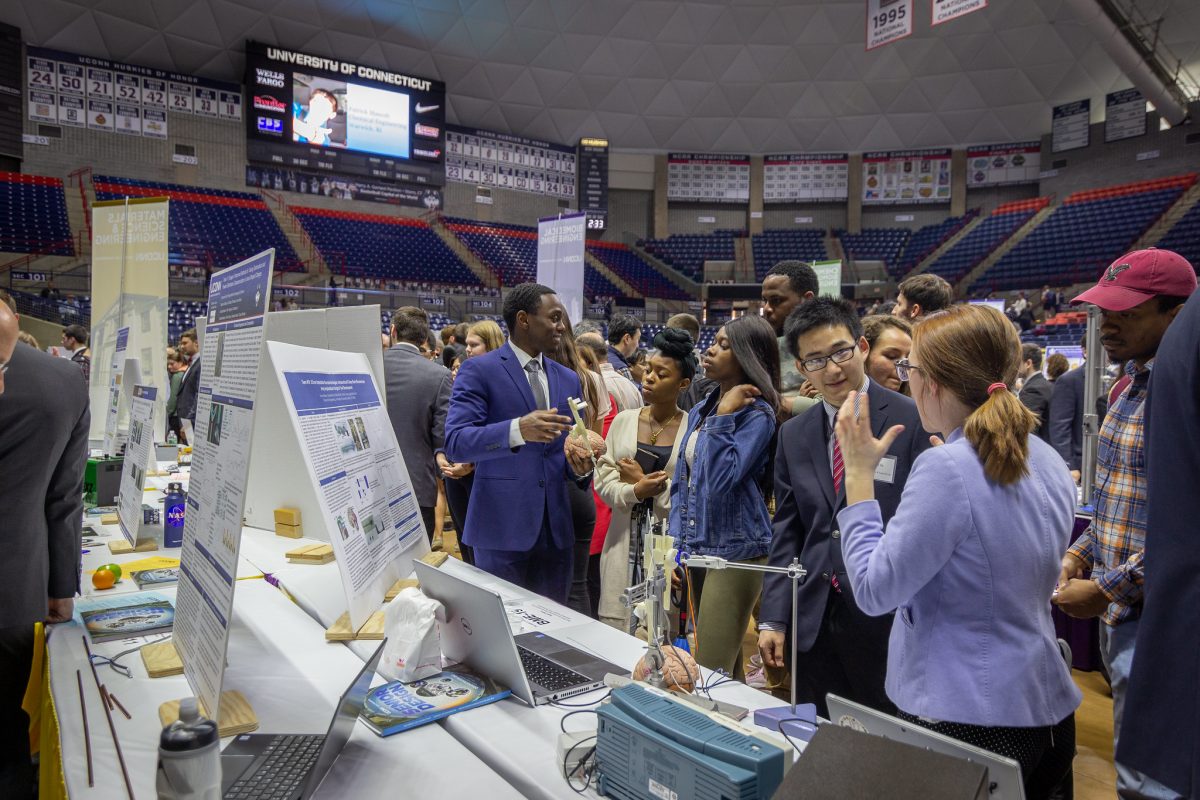
ASSA ABLOY supported three Mechanical Engineering and Materials Science Engineering teams with two projects: reduced carbon footprint door construction, and improved materials for door-locking cylinder products for increased security. Through mentorship from ASSA ABLOY employees Dan Glover, Product Manager, Door Group; Dan Picard, Senior Director of Innovation, ASSA ABLOY Opening Solutions Americas; and Clyde Roberson, Director of Product Management and Tech Services, Medeco Security Locks, the student teams spent two semesters dedicating hundreds of hours to their projects. Final projects were presented at an end-of-year public demonstration, where hundreds of teams shared their projects and findings.
UConn Senior Design Day 2023, Gampel Pavilion
“The projects we sponsored were based on some real challenges we have,” Picard explains. “We can only do so much with our limited resources, specifically on challenges surrounding science-based targets and materials themselves. We don’t have materials scientists or materials engineers in-house, so we must go to the experts. Fortunately, UConn has a wealth of experience and knowledge, so it made sense to sponsor the Senior Engineering Capstone projects.”
Sponsoring these projects also gave ASSA ABLOY the opportunity to meet new subject matter experts in these different areas and collaborate with UConn’s faculty. Picard affirms that “The engineering teams at UConn have access to some amazing technology, such as theoretical tools that help us to understand how materials function. These tools enabled the door construction project to do finite element analysis and see potential product failure points through all different types of door assemblies. They could test different amounts of force and impact resistance. This is something we do in our test lab, but they were able to simulate on a computer. The expertise of this software is something we don’t have in-house.”
Out of the 240 teams participating in Senior Design, one of ASSA ABLOY’s sponsored teams placed 3rd in the Materials Science and Engineering department competition. The project that focused on improving door locking cylinders for increased security and drill resistance, involved in-depth research of harder and tougher materials that improve the product but are easier to manufacture and machine.
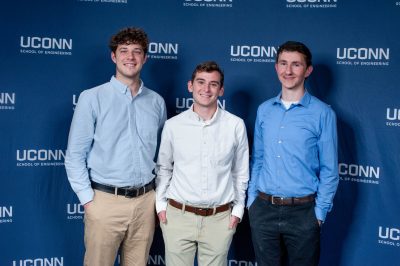
UConn Senior Design MSE team 3rd place winners: Jonathan Bane, Matthew Carragher & Charles Schwarz
“This team placing third is huge,” Glover explains. “They were competing against major companies and corporations like Sikorsky Helicopter, NASA, and Pratt and Whitney. They were also featured in UConn’s magazine, where only four projects were listed. It was an exciting achievement for them and for us as sponsors.”
What’s next for these winning ideas? They aren’t just forgotten at the end of the year. The work by the sponsored teams is being served as a baseline to kick-start new innovation initiatives at ASSA ABLOY.
“The teams at UConn provided us with ideas and insights that will help guide our future product development,” according to Picard. “We were beyond impressed with the results, particularly in lowering the CO2 footprint of the door, while maintaining its performance and integrity, and the investment was worth it. We had a real-life problem and were able to share our experiences with the students. In exchange, they provided us with hundreds of hours of research and offered potential solutions to our challenges.”
Both Glover and Picard comment on invaluable personal experiences during the program. “It’s an extra “above and beyond” what we normally do, but I learned so much,” Glover says. “I thank ASSA ABLOY for the opportunity to get involved and I would recommend we do it again in a heartbeat! It is such an enlightening experience and working with young engineers that see problems differently is energizing. We are helping develop our next generation of innovators and potential ASSA ABLOY teammates – it’s so rewarding.”
If your organization is interested in sponsoring a future UConn Senior Design project or partnering with IPB at UConn Tech Park to advance efficiency and competitiveness through sustainability, we would love to hear from you. Please contact:
Senior Design
Charles B. Maric
Director of Technical Business Development, Senior Design Projects
UConn School of Engineering
Charles.Maric@UConn.edu
860-428-2258
IPB Partnership for Sustainability
Michael DiDonato
Business Development Manager
Innovation Partnership Building at UConn Tech Park
Michael.DiDonato@UConn.edu
203-671-8719
Congratulations to the six finalists selected for The Clean Energy & Sustainability Innovation Program, a summer initiative backed by a UConn-Eversource partnership. These multidisciplinary student teams receive funding and support from faculty mentors and Eversource personnel to develop their proposed innovative strategies for achieving a sustainable future on local, state, and regional levels. We are excited to see their progress showcased at the Sustainable Clean Energy Fall 2023 Summit at UConn!
UConn and U.S. Department of Energy’s National Renewable Energy Laboratory (NREL) announced a new research partnership in October 2022. Hosted at UConn Tech Park, the collaboration will address global energy challenges including energy efficiency and resiliency, renewable energy technologies, and smart grid innovation, helping shape the response to these critical challenges of the 21st century.
Emmanouil Anagnostou, interim Executive Director of UConn Tech Park, and Junbo Zhao, Eversource Energy Center Grid Modernization Lead at IPB have started joint positions as Research Scientists at NREL under the partnership. They will be affiliated with the Grid Automation and Controls Group at NREL.
Among the many goals of the partnership, UConn and NREL will work together to develop solutions to clean energy challenges in the Northeast and increase funding opportunities not otherwise available to either individual institution. The program also enables undergraduate and graduate students to work jointly with NREL scientists and UConn faculty.
“I am proud that UConn is playing an important role in this crucial sector, and I am excited to see the creativity and determination our faculty and students bring to this work.” UConn President Radenka Maric says.
“NREL sees the partnership with UConn as a critical part of achieving clean energy at scale that brings together talent from both institutions to further our collective goals,” says Dr. Ellen Morris, director of University Partnerships at NREL.
UConn Tech Park welcomes our newest center, UConn’s Southern New England Industrial Assessment Center (SNE-IAC). SNE-IAC makes significant contributions toward a clean environment, helping New England manufacturers improve energy efficiency and reduce their carbon footprint while training a new generation of students in methods that improve industrial energy efficiency. Funded by the U.S. Department of Energy, SNE-IAC provides energy audit services at no cost to eligible manufacturers located within a 150-mile radius in Connecticut, Rhode Island, and the Greater New York area. The service helps companies identify and address problem areas, resulting in reductions in carbon emissions, energy costs, and annual energy consumption by an anticipated 10%. The team also provides outreach and education opportunities to nonparticipating manufacturers in the region. Manufacturers can sign up for an audit on the center’s website.
Directors Dr. Liang Zhang, Dr. Amy Thompson, and Dr. Ravi Gorthala lead center activities and partner with UConn Tech Park, CT utility companies Eversource and United Illuminating, and other industrial partners in outreach efforts and to provide recommendations and implementation guidance to clients. They employ seven students who are gaining valuable hands-on experience in conducting audit assessments in a variety of different manufacturing environments.
The IAC team is enthusiastic about the program’s potential to reduce manufacturers’ annual energy consumption that can ultimately improve their overall energy efficiency and sustainability.
Since its inception in 2022, IAC has made excellent progress and is on track to achieve its goal of 10 audits in the first year, increasing to a target of 20 audits per year within the next five years. Nine audits have been completed, with an additional six audit requests in the queue. Three student assessors now have the level of experience required to be eligible for an IAC Certificate from the U.S. DoE, a credential that demonstrates their energy and industrial expertise.
As one of the nation’s newer IACs, it was a great honor for the UConn team to welcome the US Secretary of Energy, Jennifer Granholm, at the IPB in May 2022, along with Connecticut Congressman Joe Courtney and UConn President Dr. Radenka Maric. During her visit to the lab, Secretary Granholm met with faculty and students before attending a press conference, where one of the center’s students had the privilege of introducing her.
IAC’s industrial advisory board is made up of strategic industrial partners including Connecticut state agencies, utility companies, and manufacturing organizations and includes Connecticut’s Chief Manufacturing Officer, Paul Lavoie.


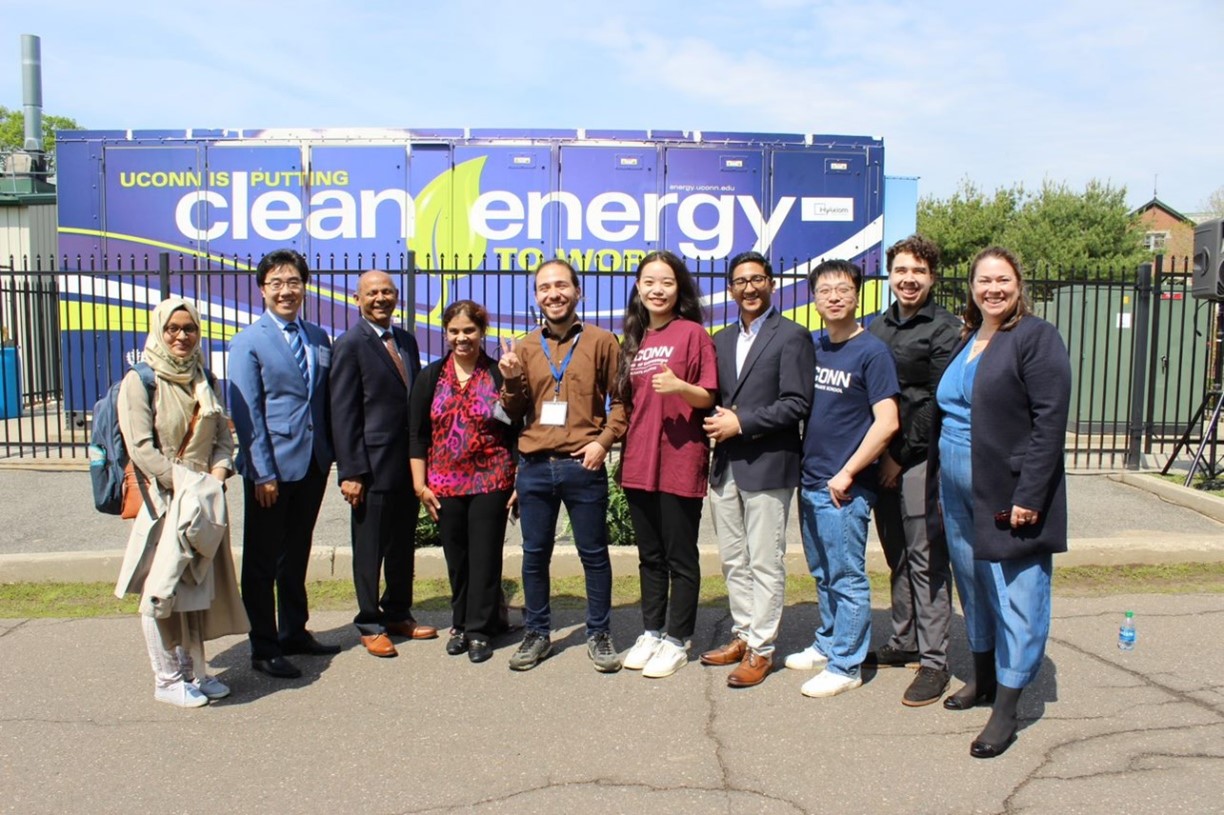
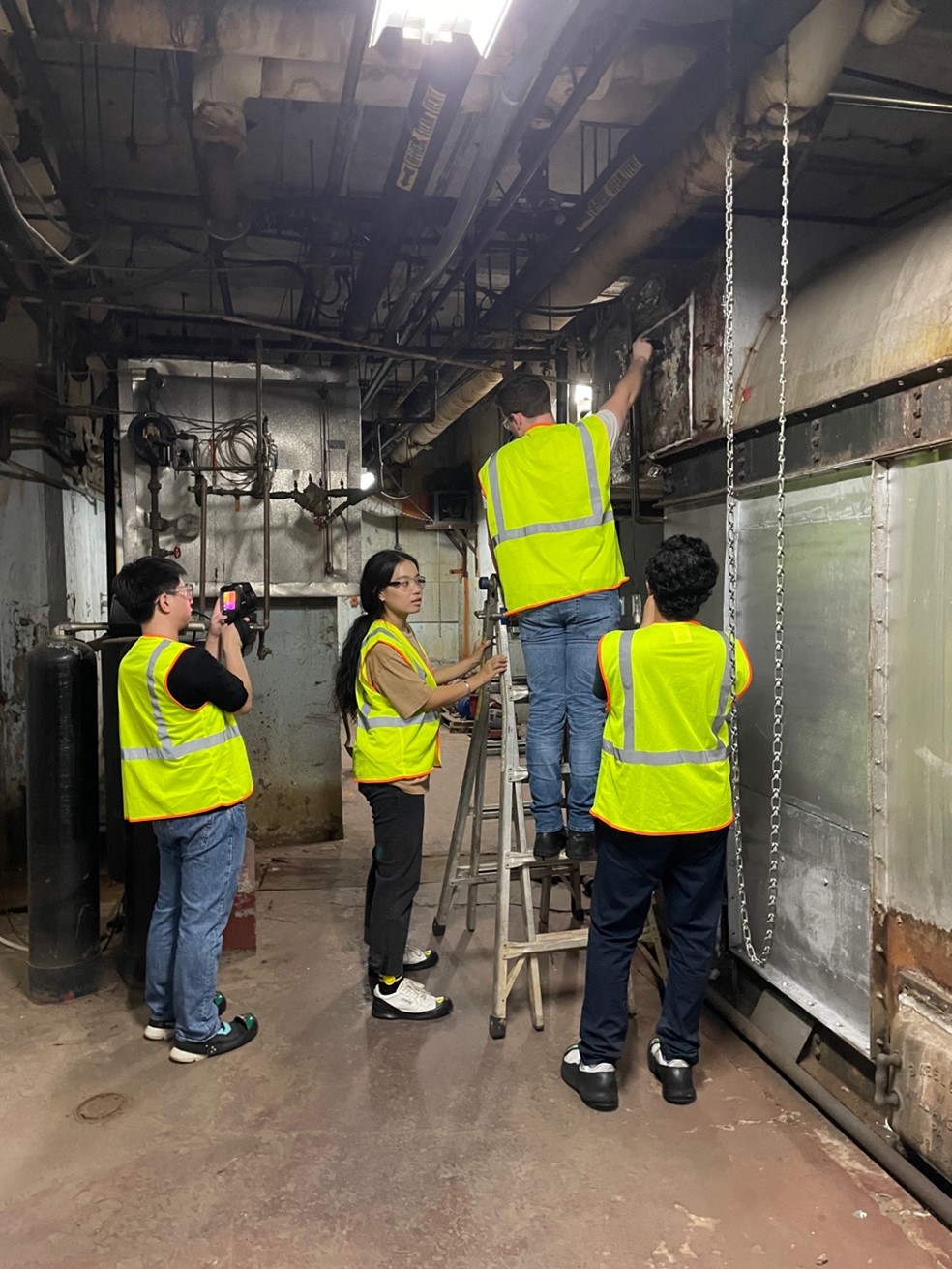 Directors Dr. Liang Zhang, Dr. Amy Thompson, and Dr. Ravi Gorthala lead center activities and partner with UConn Tech Park, CT utility companies Eversource and United Illuminating, and other industrial partners in outreach efforts and to provide recommendations and implementation guidance to clients. They employ seven students who are gaining valuable hands-on experience in conducting audit assessments in a variety of different manufacturing environments.
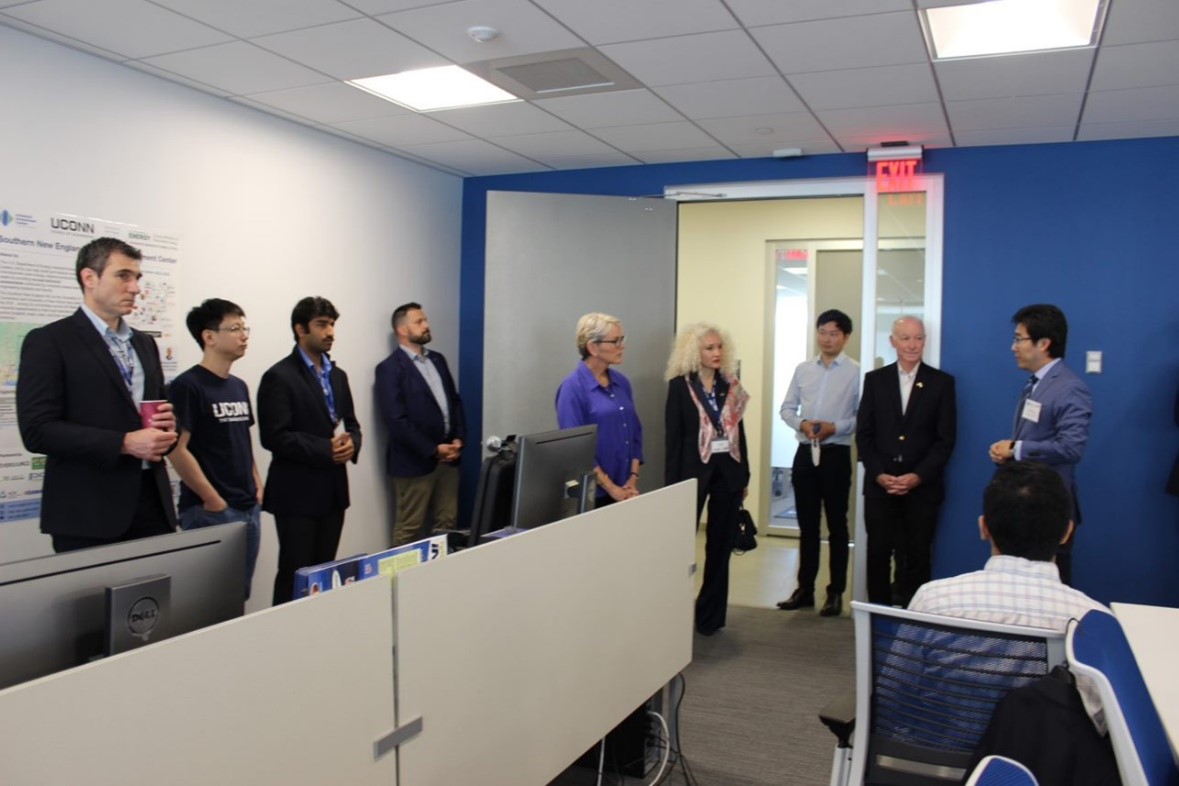 As one of the nation’s newer IACs, it was a great honor for the UConn team to welcome the US Secretary of Energy, Jennifer Granholm, at the IPB in May 2022, along with Connecticut Congressman Joe Courtney and UConn President Dr. Radenka Maric. During her visit to the lab, Secretary Granholm met with faculty and students before attending a press conference, where one of the center’s students had the privilege of introducing her.